
The Leaning Plant: Why Your Business Needs a Strong Foundation
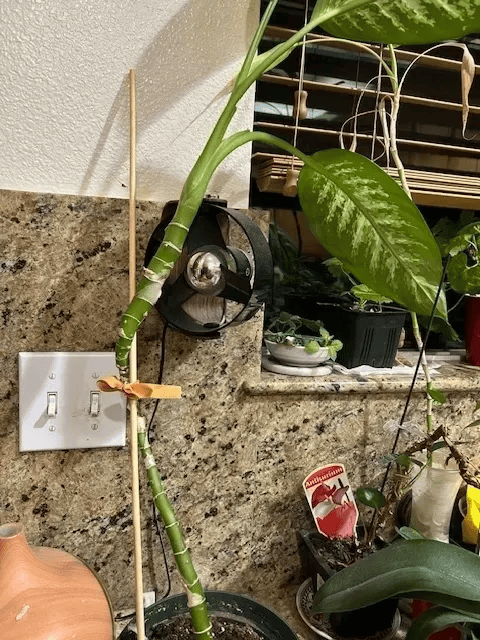
I have a plant that tells a cautionary tale.
It started as a tiny sprout, growing slowly but surely. Then, as it got taller, something interesting happened—it leaned on a fan for support. At first, it seemed fine, even thriving. But over time, the lower part of the stem remained thin and weak, while the upper part thickened and grew strong.
Now, if I try to move the plant away from the fan, it topples over. The foundation isn’t strong enough to hold up its own weight.
And that got me thinking—small businesses can grow the same way.
The Illusion of Strength
In the early years of a business, it’s easy to lean on outside support. Maybe it’s a single major client, a go-to supplier, or even just the sheer energy of the founder pushing everything forward. Growth happens, and from the outside, the business looks solid.
But if the foundation isn’t built properly—if the core isn’t strong—then that growth is an illusion. Just like my plant, the business may be thriving in some ways, but if the base is weak, it won’t stand on its own when the external support is removed.
So how do you make sure your business isn’t dependent on a crutch?
Building a Strong Foundation for Long-Term Growth
A business that can stand tall, no matter the conditions, needs a foundation built on:
1. Core Mission and Values That Flow Through Everything
Every decision—hiring, marketing, partnerships, product development—should align with the company’s mission and values. If these principles are just words on a website instead of the heartbeat of the business, the foundation will always be shaky.
A strong business makes decisions not just based on immediate profit but on long-term sustainability and alignment with its core purpose.
2. Clear Policies and Procedures
A business without structure is like a plant without roots—it won’t withstand strong winds. Clear policies and processes ensure that no single person (not even the owner) is the only one holding everything together.
Think of it this way: Could your business still run smoothly if you stepped away for a month? If the answer is no, it may be time to reinforce your foundation.
3. Resilience Over Reliance
Many small businesses unknowingly put themselves at risk by relying too much on a single client, supplier, or revenue stream. Just like my plant needed to build strength in its lower stem, businesses need to distribute their weight evenly.
That means:
Diversifying income streams so that losing one big client doesn’t sink the business.
Building strong relationships with multiple suppliers to prevent disruption.
Creating a brand that customers choose because of its values, not just convenience.
4. Long-Term Vision
A business that focuses only on the next quarter may grow fast but without stability. A strong foundation includes planning for long-term growth, anticipating potential risks, and setting up strategies to weather storms.
This doesn’t mean predicting every challenge, but it does mean being intentional about the direction of growth. If my plant had been given support early on, encouraging strength at the base, it wouldn’t be struggling to hold itself up now.
Avoiding the “Leaning Plant” Problem
If my plant had developed a sturdy base from the start, it wouldn’t need the fan to keep it upright now. In business, the same principle applies: If you take the time to establish a strong foundation early on, you won’t need outside support to hold everything together later.
But the good news? It’s never too late to strengthen your base. If your business has grown quickly but feels wobbly, start reinforcing its structure now. Revisit your mission, shore up your processes, and make sure you’re growing in a way that’s sustainable.
Because one day, when that external support is gone, you want to be confident that your business can stand tall—on its own.